Car insurance is a contract between you and an insurance company that protects you against financial loss in the event of an accident or theft. In exchange for your paying a premium, the insurance company agrees to pay your losses as outlined in your policy. This guide breaks down exactly how this crucial financial safety net operates — from the legal requirements every driver must meet, to the factors that determine what you pay, to the strategies that can lower your bill.
Table of Contents
1. Liability Coverage: The Legal Requirement
Liability insurance is the absolute foundation of any car insurance policy. In almost every state across the country, it is legally required for you to carry a minimum amount of liability coverage to drive on public roads. Unlike other types of coverage that protect you or your vehicle, liability insurance is specifically designed to protect other people and their property if you are found at fault in an accident.
There are two main components to liability coverage: Bodily Injury Liability (BI) and Property Damage Liability (PD). Bodily injury coverage pays for the medical expenses, lost wages, and potentially pain and suffering of the other party involved in an accident you cause. Property damage coverage pays to repair or replace the other party's vehicle, as well as any other property you might damage, such as fences, mailboxes, or storefronts.
When you look at a car insurance policy, liability limits are usually written as three numbers, such as 25/50/25. This translates to $25,000 for bodily injury per person, $50,000 for bodily injury per accident, and $25,000 for property damage per accident. While state minimums vary, insurance experts universally recommend purchasing significantly more than the bare minimum. A severe accident can easily exhaust minimum limits, leaving you personally responsible for the remaining balance. If your limits are exceeded, the other party can sue you, putting your personal assets, savings, and future earnings at serious risk.
2. Physical Damage: Comprehensive & Collision
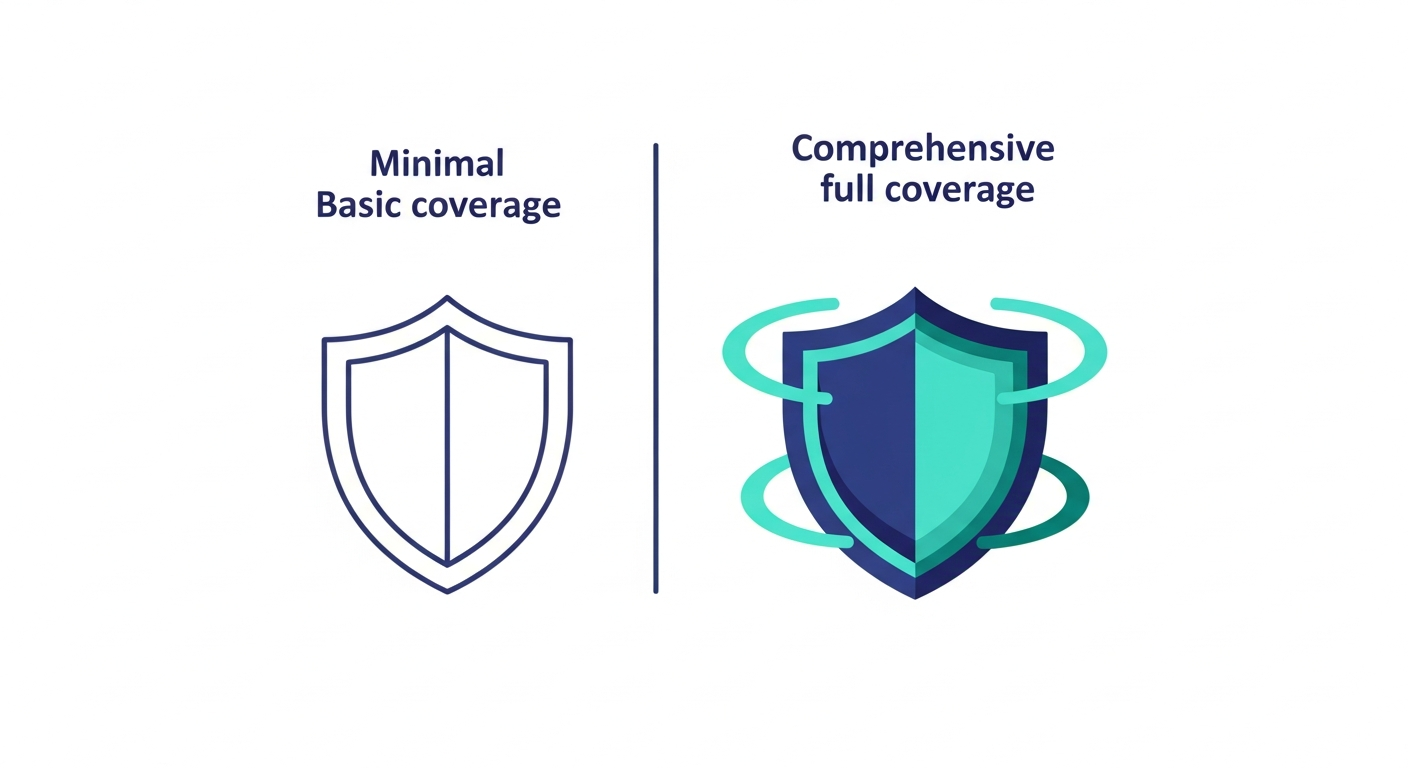
While liability insurance protects others, physical damage coverage is what protects your own vehicle. This comes in two forms: collision coverage and comprehensive coverage. Together with liability, these are often referred to as "full coverage," though that term can be misleading as no policy covers absolutely everything under all circumstances.
Collision coverage pays to repair or replace your vehicle if you collide with another vehicle or a stationary object, like a tree or a guardrail, regardless of who is at fault. If you are financing or leasing your vehicle, your lender will almost certainly require you to carry collision coverage. Even if you own your car outright, it is highly recommended unless the vehicle's market value is so low that the cost of the premium plus your deductible exceeds the potential payout.
Comprehensive coverage, on the other hand, protects your vehicle against "acts of God" and other incidents not involving a collision. This includes theft, vandalism, fire, natural disasters (like floods or hail), falling objects (like tree branches), and striking an animal (like a deer). Comprehensive coverage is crucial for providing peace of mind against the unpredictable events that can total a car just as easily as a severe crash.
Both comprehensive and collision coverages require you to choose a deductible—the amount you must pay out of pocket before your insurance kicks in. Typical deductibles range from $250 to $1,000. Choosing a higher deductible will lower your monthly premium, but it means you assume more financial risk in the event of a claim. It's a balancing act between your monthly budget and your emergency savings.

3. Understanding State Minimums
Every state except for New Hampshire and parts of Virginia requires drivers to carry a minimum amount of car insurance. These laws are designed to protect the public from the financial devastation of being injured by an uninsured driver. However, simply meeting your state's minimum requirements is almost never enough to truly protect your own financial well-being.
State minimums are often shockingly low. For example, some states only require $15,000 in bodily injury liability per person and $5,000 in property damage. If you cause a severe accident that totals a brand new SUV and sends two people to the hospital, that $20,000 total coverage will be exhausted almost instantly. You would be held personally liable for the remaining tens of thousands—or hundreds of thousands—of dollars.
Furthermore, minimum requirements typically only encompass liability coverage. They do not include collision or comprehensive coverage, meaning damage to your own vehicle is completely your responsibility. They also frequently exclude uninsured/underinsured motorist coverage, which is vital given that roughly 1 in 8 drivers on the road is currently operating a vehicle without insurance.
When establishing your policy, treat state minimums as a legal baseline, not a recommendation. Most financial advisors recommend carrying liability limits of at least 100/300/100 ($100,000 bodily injury per person, $300,000 bodily injury per accident, and $100,000 property damage). This level of coverage ensures that your wages cannot be garnished and your assets cannot be seized in the event of a catastrophic, at-fault collision.
4. How Premiums Are Calculated
Understanding how insurance companies calculate your premiums can feel like deciphering a secret code. However, actuaries use highly specific, statistically driven factors to determine your level of risk. The higher your perceived risk of filing a claim, the more you will pay for coverage. Several key variables consistently play a major role in pricing.
Your driving record is arguably the most significant factor. A clean record with no accidents, speeding tickets, or DUIs demonstrates that you are a safe driver, leading to the best possible rates. Conversely, a history of infractions indicates higher risk. Even a single speeding ticket can cause your rates to jump, and a DUI can result in your premiums doubling or trippling.
Age and experience also heavily influence your rates. Young, inexperienced drivers—particularly teenagers—are statistically much more likely to be involved in accidents. As a result, they face some of the highest premiums on the market. Rates typically begin to drop significantly once a driver reaches age 25, assuming they maintain a clean driving record. Drivers in their 40s, 50s, and 60s generally enjoy the lowest rates.
Location is another critical piece of the puzzle. Insurance is regulated at the state level, but pricing is determined down to the ZIP code. If you live in a densely populated urban area with high rates of traffic accidents, vehicle theft, and vandalism, you will pay more than someone living in a quiet rural community. Similarly, regions prone to severe weather events, such as hurricanes or hailstorms, often see higher comprehensive coverage rates.
In most states, your credit-based insurance score is also factored into your premium. Statistical data shows a strong correlation between lower credit scores and a higher likelihood of filing insurance claims. Therefore, maintaining good credit can significantly lower your auto insurance costs. Note that a few states, including California, Hawaii, and Massachusetts, have banned the use of credit scores in determining auto insurance rates.

5. Explore Key Car Insurance Topics
Understanding the basics of how car insurance works is just the foundation. Once you know the coverage types, the next priorities are managing costs, shopping smartly, and choosing the right insurer. Use the guides below to go deeper on any topic that applies to your situation.
Car Insurance Costs & Savings
Why premiums vary and proven ways to pay less
Compare Car Insurance Quotes
How to shop 3+ insurers for the best deal
Best Car Insurance Companies
Top insurers rated on claims, value, and service
State-by-State Insurance Laws
Your state's minimums, no-fault rules, and quirks
Car Insurance by Driver Type
Tailored coverage strategies for your driver profile
Liability Coverage Explained
The legally required coverage every driver must carry
What Is Full Coverage?
When full coverage is — and isn't — worth the cost
Comprehensive vs. Collision
Which physical damage coverage do you actually need?
How Car Insurance Claims Work
What to do immediately after an accident
6. Going Deeper: Related Guides
Car insurance basics are just the starting point. Once you understand how coverage works, your next priority is ensuring you are not overpaying. Our car insurance costs guide breaks down every factor that determines your premium and shows proven strategies for reducing it. When you're ready to shop, learn exactly how to compare car insurance quotes to find the best deal without sacrificing coverage quality.
Coverage needs also vary significantly by where you live and your driver profile. See our state-by-state insurance guides for the specific laws, minimums, and market quirks in your state. And if you fall into a specialized driver category — teen, high-risk, veteran, or EV owner — our car insurance by driver type guide provides tailored strategies. Finally, our best car insurance companies guide helps you evaluate which insurer is right for your specific needs.
The Bottom Line
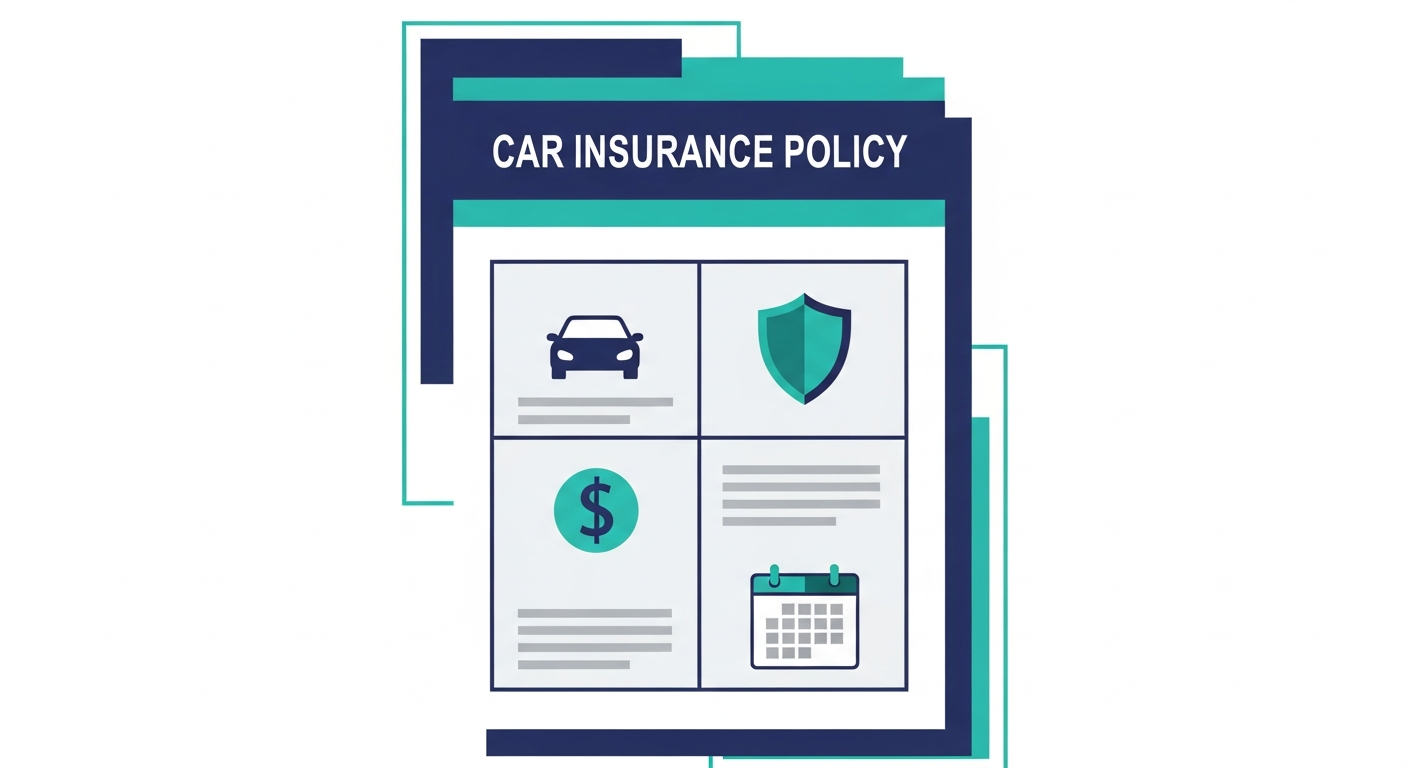
Car insurance isn't just a legal hoop to jump through — it is a critical tool for protecting your current assets and future earnings. Take the time to read your declarations page, understand your deductible, and ensure your liability limits are high enough to provide true peace of mind. Then compare quotes annually to make sure you're not overpaying for that protection.
Frequently Asked Questions
What is a car insurance premium?
A premium is the amount of money you pay an insurance company in exchange for coverage. It is typically paid monthly, bi-annually, or annually.
What is a deductible?
A deductible is the amount of money you agree to pay out of pocket before your insurance company pays for a covered loss. Higher deductibles usually result in lower premiums.
Does my car insurance cover rental cars?
In most cases, your personal car insurance policy extends to a rental car for personal use. However, you should always verify this with your specific provider before declining the rental agency's coverage.
What is the difference between liability and full coverage?
Liability coverage (legally required) pays for other people's damages when you cause an accident. Full coverage adds collision and comprehensive protection for your own vehicle — required by lenders on financed cars.