
Your deductible is the amount you agree to pay out of your own pocket before your insurance company covers the rest of a claim. Choosing the right deductible is one of the most impactful financial decisions in structuring your car insurance policy. For a complete overview, read our full guide to how car insurance works.
Understanding how insurance companies calculate your premiums can feel like deciphering a secret code. However, actuaries use highly specific, statistically driven factors to determine your level of risk. The higher your perceived risk of filing a claim, the more you will pay for coverage. Several key variables consistently play a major role in pricing.
Your driving record is arguably the most significant factor. A clean record with no accidents, speeding tickets, or DUIs demonstrates that you are a safe driver, leading to the best possible rates. Conversely, a history of infractions indicates higher risk. Even a single speeding ticket can cause your rates to jump, and a DUI can result in your premiums doubling or trippling.
Age and experience also heavily influence your rates. Young, inexperienced drivers—particularly teenagers—are statistically much more likely to be involved in accidents. As a result, they face some of the highest premiums on the market. Rates typically begin to drop significantly once a driver reaches age 25, assuming they maintain a clean driving record. Drivers in their 40s, 50s, and 60s generally enjoy the lowest rates.
Location is another critical piece of the puzzle. Insurance is regulated at the state level, but pricing is determined down to the ZIP code. If you live in a densely populated urban area with high rates of traffic accidents, vehicle theft, and vandalism, you will pay more than someone living in a quiet rural community. Similarly, regions prone to severe weather events, such as hurricanes or hailstorms, often see higher comprehensive coverage rates.
In most states, your credit-based insurance score is also factored into your premium. Statistical data shows a strong correlation between lower credit scores and a higher likelihood of filing insurance claims. Therefore, maintaining good credit can significantly lower your auto insurance costs. Note that a few states, including California, Hawaii, and Massachusetts, have banned the use of credit scores in determining auto insurance rates.
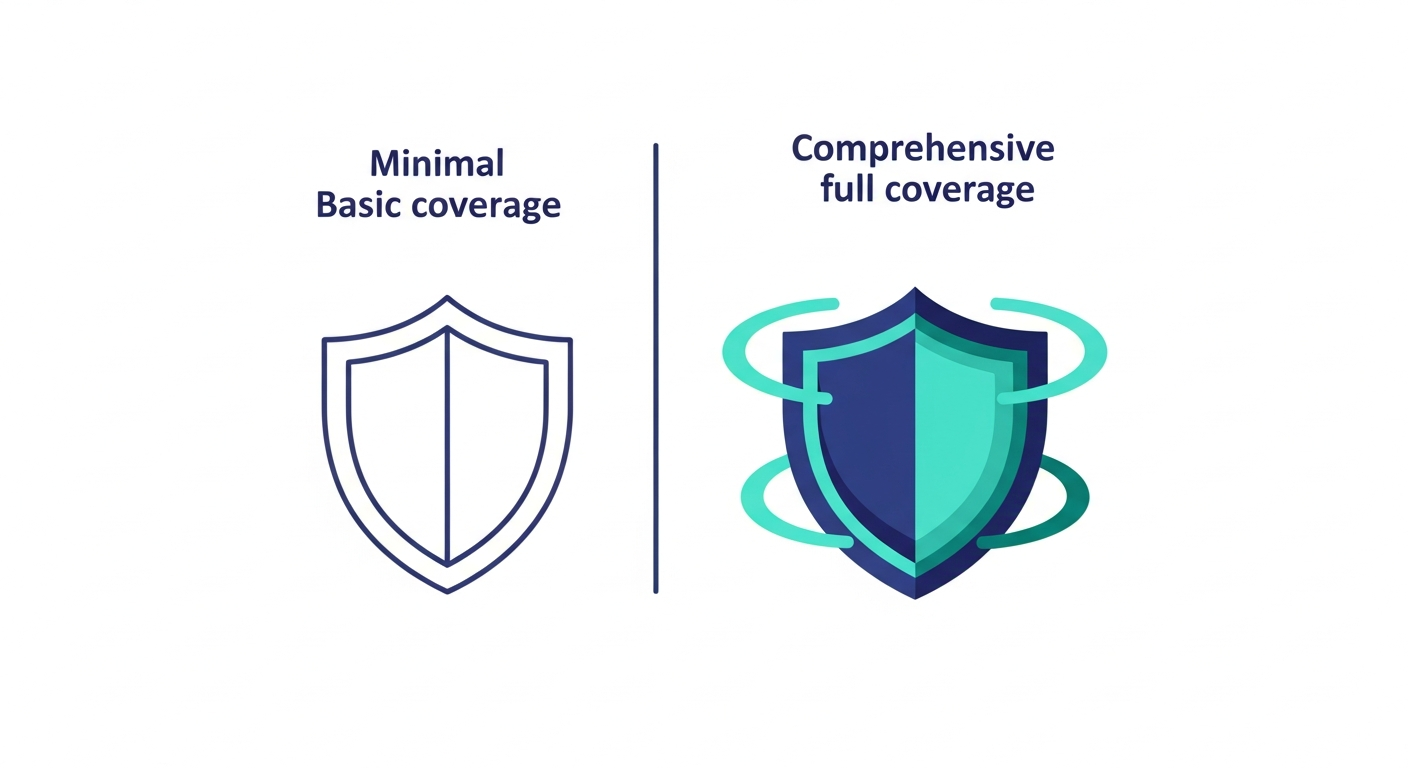
While liability insurance protects others, physical damage coverage is what protects your own vehicle. This comes in two forms: collision coverage and comprehensive coverage. Together with liability, these are often referred to as "full coverage," though that term can be misleading as no policy covers absolutely everything under all circumstances.
Collision coverage pays to repair or replace your vehicle if you collide with another vehicle or a stationary object, like a tree or a guardrail, regardless of who is at fault. If you are financing or leasing your vehicle, your lender will almost certainly require you to carry collision coverage. Even if you own your car outright, it is highly recommended unless the vehicle's market value is so low that the cost of the premium plus your deductible exceeds the potential payout.
Comprehensive coverage, on the other hand, protects your vehicle against "acts of God" and other incidents not involving a collision. This includes theft, vandalism, fire, natural disasters (like floods or hail), falling objects (like tree branches), and striking an animal (like a deer). Comprehensive coverage is crucial for providing peace of mind against the unpredictable events that can total a car just as easily as a severe crash.
Both comprehensive and collision coverages require you to choose a deductible—the amount you must pay out of pocket before your insurance kicks in. Typical deductibles range from $250 to $1,000. Choosing a higher deductible will lower your monthly premium, but it means you assume more financial risk in the event of a claim. It's a balancing act between your monthly budget and your emergency savings.
Securing the best possible rate requires taking advantage of every discount available to you. Auto insurance companies offer a wide array of discounts, but they rarely advertise all of them upfront—you often have to ask or ensure your agent knows you qualify.
One of the most common and substantial discounts is the multi-policy or bundling discount. If you purchase your auto insurance from the same company that provides your homeowners or renters insurance, you can typically save between 10% and 25% on both policies. Similarly, insuring multiple vehicles on the same policy almost always yields a discount.
Safe driving habits are heavily rewarded. Most insurers offer a "good driver" discount to those who go three to five years without an accident or a moving violation. Many companies now offer telematics or usage-based insurance programs. By downloading an app or plugging a device into your car, the insurer tracks your driving habits—such as speed, hard braking, and the time of day you drive. If you prove to be a safe driver, you can earn significant discounts, sometimes up to 30%.
For younger drivers, the "good student" discount is invaluable. High school and college students who maintain a B average or better can often save 10% to 15% on their premiums, as statistics show that good students are generally safer, more responsible drivers.
Vehicle safety features also matter. If your car is equipped with advanced safety technology like anti-lock brakes, electronic stability control, multiple airbags, or anti-theft devices, make sure your insurer knows. While these features are standard on many modern cars, verifying them on your policy can trigger small but helpful premium reductions.
Deductibles, Costs, and Quote Comparison
Your deductible is one of the most powerful levers for managing your car insurance costs — raising it from $500 to $1,000 can lower your premium by 10–20%. When you're comparing car insurance quotes, always use the same deductible amount with every insurer so you're comparing equivalent coverage. Mixing a $250 deductible from one company with a $1,000 deductible from another will give you a meaningless comparison. See our comprehensive vs collision guide to understand which coverage types the deductible applies to — liability coverage has no deductible at all.
The Bottom Line
Navigating the complexities of car insurance requires patience and a willingness to understand the details of your policy. By taking the time to compare your options from multiple insurers, utilize available discounts, and ensure your coverage limits align with your personal financial risk, you can secure the protection you need without overpaying. Always remember to review your policy annually, as your life circumstances and available rates will change over time.
Frequently Asked Questions
Should I choose a high or low deductible?
A higher deductible (e.g., $1,000) lowers your monthly premium but increases your out-of-pocket cost when you file a claim. Choose the highest deductible you could comfortably pay in an emergency.
Does the deductible apply to liability claims?
No. Deductibles only apply to physical damage coverages (collision and comprehensive). Liability coverage has no deductible — your insurer pays covered claims without requiring a contribution from you.