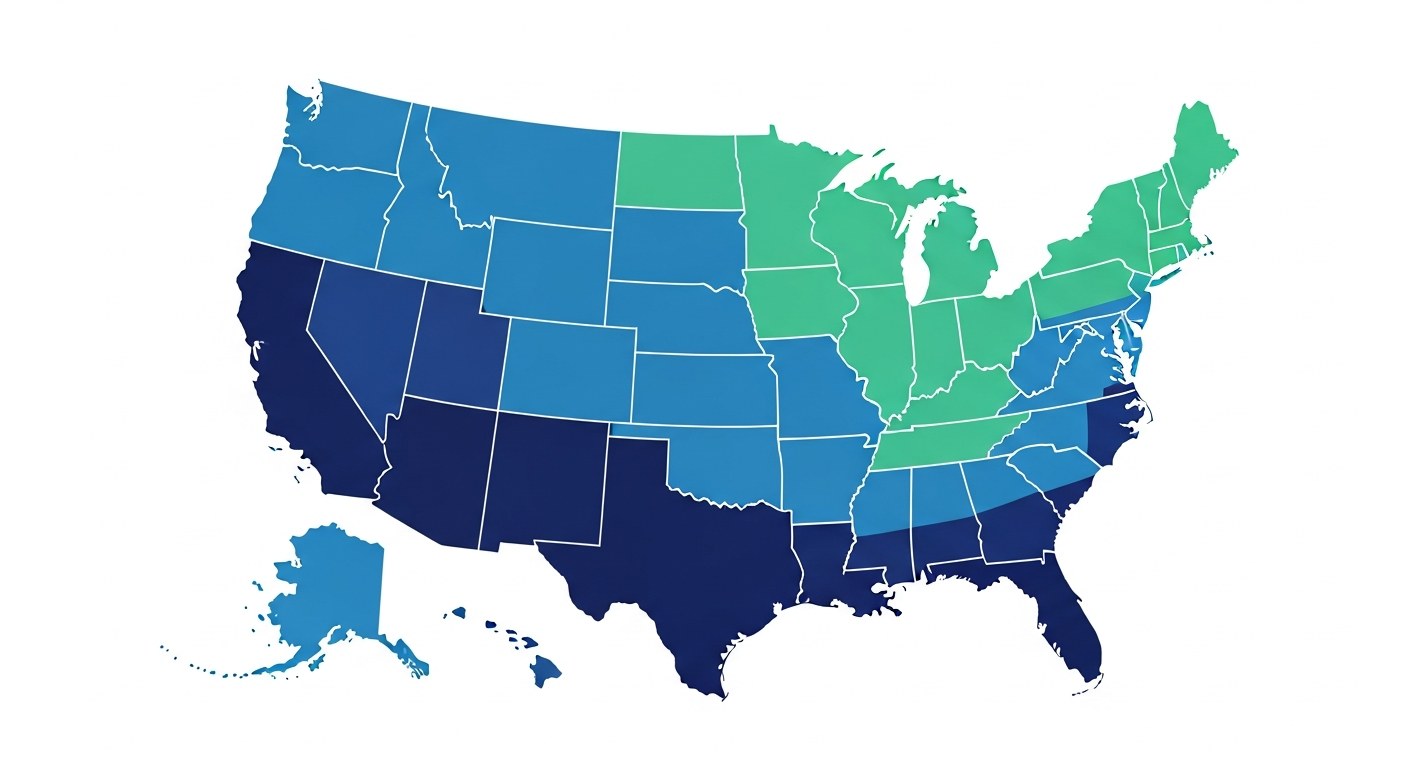
Florida operates under a no-fault insurance system, meaning you must rely on your own Personal Injury Protection (PIP) coverage for medical bills after an accident, regardless of who caused it. For a complete overview, read our full guide to car insurance by state guide.
Every state except for New Hampshire and parts of Virginia requires drivers to carry a minimum amount of car insurance. These laws are designed to protect the public from the financial devastation of being injured by an uninsured driver. However, simply meeting your state's minimum requirements is almost never enough to truly protect your own financial well-being.
State minimums are often shockingly low. For example, some states only require $15,000 in bodily injury liability per person and $5,000 in property damage. If you cause a severe accident that totals a brand new SUV and sends two people to the hospital, that $20,000 total coverage will be exhausted almost instantly. You would be held personally liable for the remaining tens of thousands—or hundreds of thousands—of dollars.
Furthermore, minimum requirements typically only encompass liability coverage. They do not include collision or comprehensive coverage, meaning damage to your own vehicle is completely your responsibility. They also frequently exclude uninsured/underinsured motorist coverage, which is vital given that roughly 1 in 8 drivers on the road is currently operating a vehicle without insurance.
When establishing your policy, treat state minimums as a legal baseline, not a recommendation. Most financial advisors recommend carrying liability limits of at least 100/300/100 ($100,000 bodily injury per person, $300,000 bodily injury per accident, and $100,000 property damage). This level of coverage ensures that your wages cannot be garnished and your assets cannot be seized in the event of a catastrophic, at-fault collision.
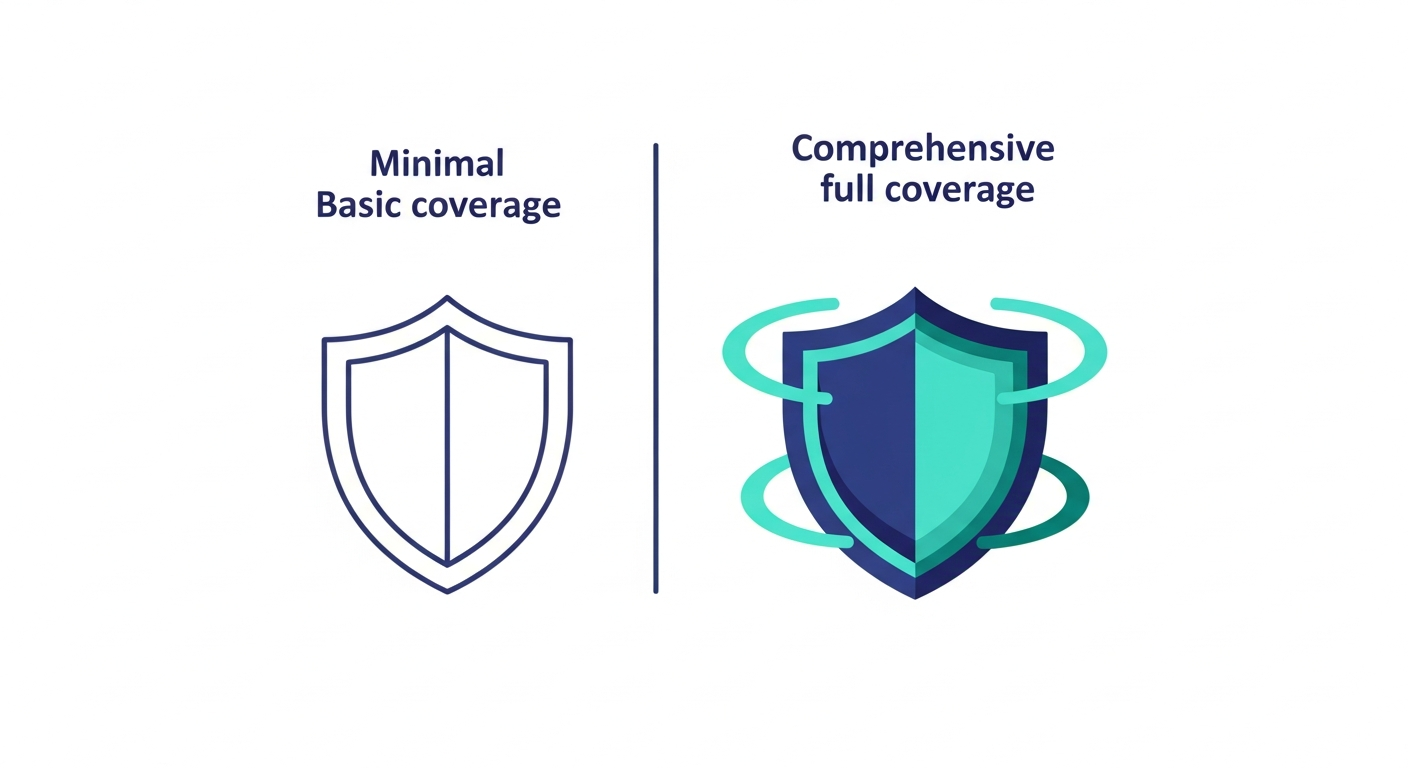
While liability insurance protects others, physical damage coverage is what protects your own vehicle. This comes in two forms: collision coverage and comprehensive coverage. Together with liability, these are often referred to as "full coverage," though that term can be misleading as no policy covers absolutely everything under all circumstances.
Collision coverage pays to repair or replace your vehicle if you collide with another vehicle or a stationary object, like a tree or a guardrail, regardless of who is at fault. If you are financing or leasing your vehicle, your lender will almost certainly require you to carry collision coverage. Even if you own your car outright, it is highly recommended unless the vehicle's market value is so low that the cost of the premium plus your deductible exceeds the potential payout.
Comprehensive coverage, on the other hand, protects your vehicle against "acts of God" and other incidents not involving a collision. This includes theft, vandalism, fire, natural disasters (like floods or hail), falling objects (like tree branches), and striking an animal (like a deer). Comprehensive coverage is crucial for providing peace of mind against the unpredictable events that can total a car just as easily as a severe crash.
Both comprehensive and collision coverages require you to choose a deductible—the amount you must pay out of pocket before your insurance kicks in. Typical deductibles range from $250 to $1,000. Choosing a higher deductible will lower your monthly premium, but it means you assume more financial risk in the event of a claim. It's a balancing act between your monthly budget and your emergency savings.
Comparing car insurance quotes is the single most effective strategy for lowering your rates. Because every insurance company uses its own proprietary algorithm to calculate risk, the exact same driver with the exact same vehicle can receive wildly different quotes from different insurers. Here is a systematic approach to comparing quotes effectively.
First, gather your necessary information. Before you start requesting quotes, have your driver's license number, vehicle identification number (VIN), current odometer reading, and a copy of your current insurance declarations page handy. Having your current policy ensures you can compare apples to apples.
When requesting quotes, consistency is key. You must request the exact same coverage types, limits, and deductibles from every company. If you request a quote from Company A with state minimum liability and a quote from Company B with $100,000 in liability, the comparison is useless. Determine the level of coverage you need first, and stick to that baseline for every inquiry.
Don't look at price alone. While affordability is crucial, the cheapest policy isn't always the best value. Look at the financial strength rating of the insurer through agencies like A.M. Best. A company with poor financial health might struggle to pay out claims following a major disaster. Furthermore, read customer reviews regarding their claims process. An insurer that offers incredibly low rates but fights you on every legitimate claim is ultimately a poor investment.
Finally, consider using an independent insurance broker. Unlike captive agents who only sell products for one specific company (like State Farm or Allstate), independent brokers can pull quotes from dozens of different insurance providers at once. They can do the heavy lifting of comparison shopping for you and often have access to smaller, regional carriers that you might not find through a simple internet search.
Florida's High Costs — And How to Fight Them
Florida consistently ranks among the most expensive states for car insurance due to its no-fault PIP requirements, hurricane risk, and high rates of insurance fraud. Read our car insurance costs guide to understand how state-specific factors affect your premium. To combat Florida's high rates, comparing quotes from multiple Florida-licensed insurers is especially important — pricing varies enormously in this market. Also see how California handles insurance for a contrast with a different state regulatory system.
The Bottom Line
Navigating the complexities of car insurance requires patience and a willingness to understand the details of your policy. By taking the time to compare your options from multiple insurers, utilize available discounts, and ensure your coverage limits align with your personal financial risk, you can secure the protection you need without overpaying. Always remember to review your policy annually, as your life circumstances and available rates will change over time.
Frequently Asked Questions
Is Florida a no-fault state?
Yes, Florida requires drivers to carry Personal Injury Protection (PIP) to cover their own injuries regardless of fault.