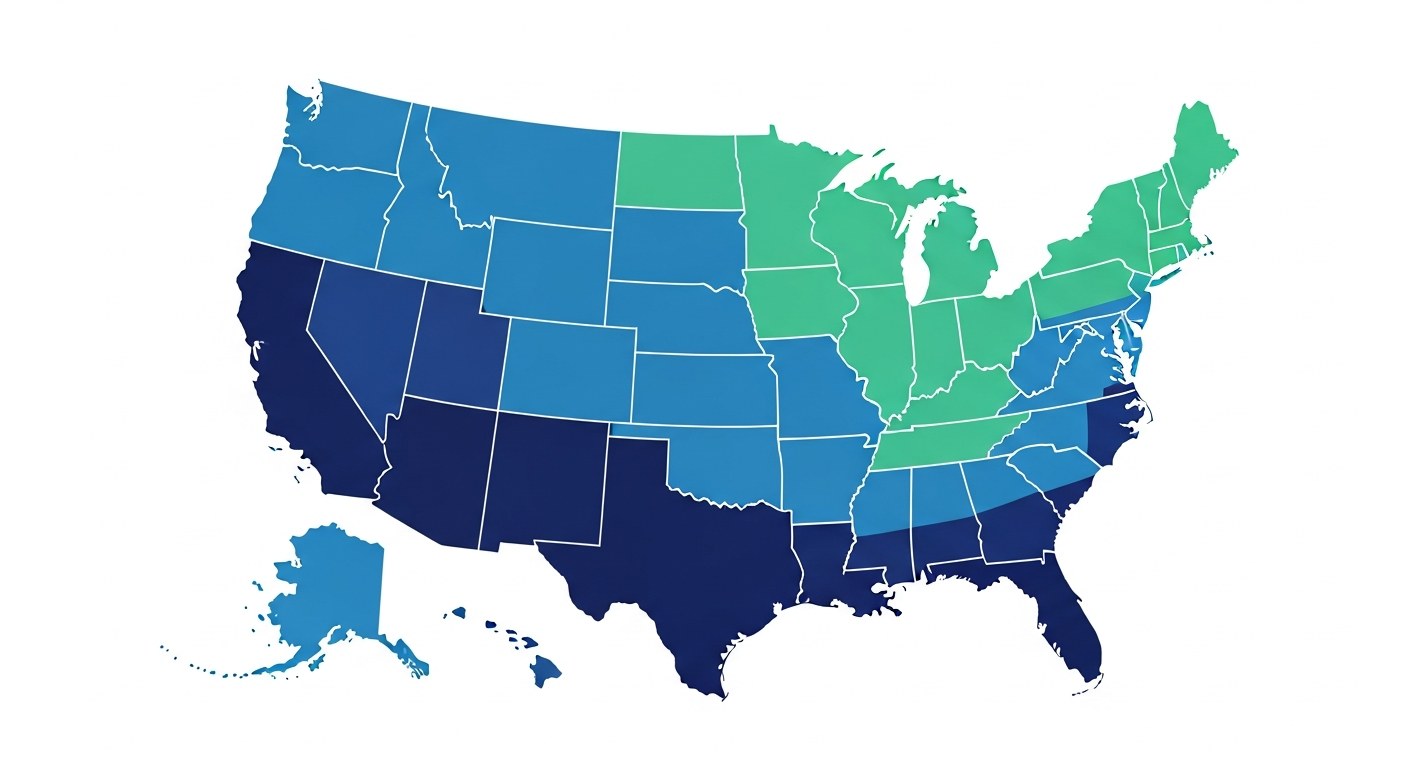
Because insurance is regulated at the state level rather than federally, the laws, minimum requirements, and even the terminology can change drastically the moment you cross state lines. Is your state a "no-fault" state? Do you need PIP? Select your state below for a detailed guide — and read on for a cross-state cost comparison.
Tort vs. No-Fault States
In a traditional "tort" or at-fault state, the driver who causes the accident is financially responsible for the damages. In a "no-fault" state, drivers must carry Personal Injury Protection (PIP) to cover their own medical expenses regardless of who caused the crash. Property damage, however, is still handled on an at-fault basis everywhere.
Understanding your state's fault system directly affects which coverages you must carry and how much you'll pay. Regardless of your state's system, comparing quotes from multiple insurers remains the most reliable way to ensure you're not overpaying for state-required coverage. See our car insurance costs guide for a deeper look at how state-specific regulations affect your premium.
Compare Insurance Costs Across States
Where you live is one of the most powerful factors in your auto insurance premium — often more impactful than your driving record. The table below shows how cost levels and fault systems compare across the states we cover. Use it to set realistic expectations before you start shopping.
| State | System | Cost Level | Key Factor |
|---|---|---|---|
| Florida | No-fault (PIP) | Very High | Hurricane risk + fraud |
| Michigan | No-fault (PIP) | Very High | Highest PIP limits in U.S. |
| Louisiana | At-fault (Tort) | Very High | High litigation rates |
| California | At-fault (Tort) | High | No credit scoring allowed |
| New York | No-fault (PIP) | High | Urban density pricing |
| Texas | At-fault (Tort) | Moderate-High | Large state — varies by city |
| Georgia | At-fault (Tort) | Moderate-High | Urban/rural split |
| Utah | No-fault (PIP) | Moderate | Among more affordable states |
| Maine | At-fault (Tort) | Low | Consistently cheapest in U.S. |
| Idaho | At-fault (Tort) | Low | Low population, low claims |
Cost levels are relative to the national average and based on publicly available industry data. Individual rates vary by driver profile. Always compare personalized quotes in your specific state.
State Coverage Verification Checklist
- Confirm your state's minimum liability limits (Bodily Injury and Property Damage)
- Check whether your state requires Personal Injury Protection (PIP)
- Verify whether Uninsured Motorist coverage is mandatory or recommended in your state
- Find out if your state allows credit scores to affect insurance rates
- Ensure your policy covers you in neighboring states if you regularly commute across borders
- Check your state's no-fault vs. at-fault designation before choosing liability limits
Frequently Asked Questions
What happens if I drive without insurance?
Driving uninsured is illegal in nearly every state. Penalties include fines, license suspension, vehicle impoundment, and personal liability for all damages you cause in an accident.
Does car insurance follow the car or the driver?
In most cases, car insurance follows the vehicle. If someone borrows your car and has an accident, your insurance is typically the primary coverage — which is why lending your car has real financial implications.